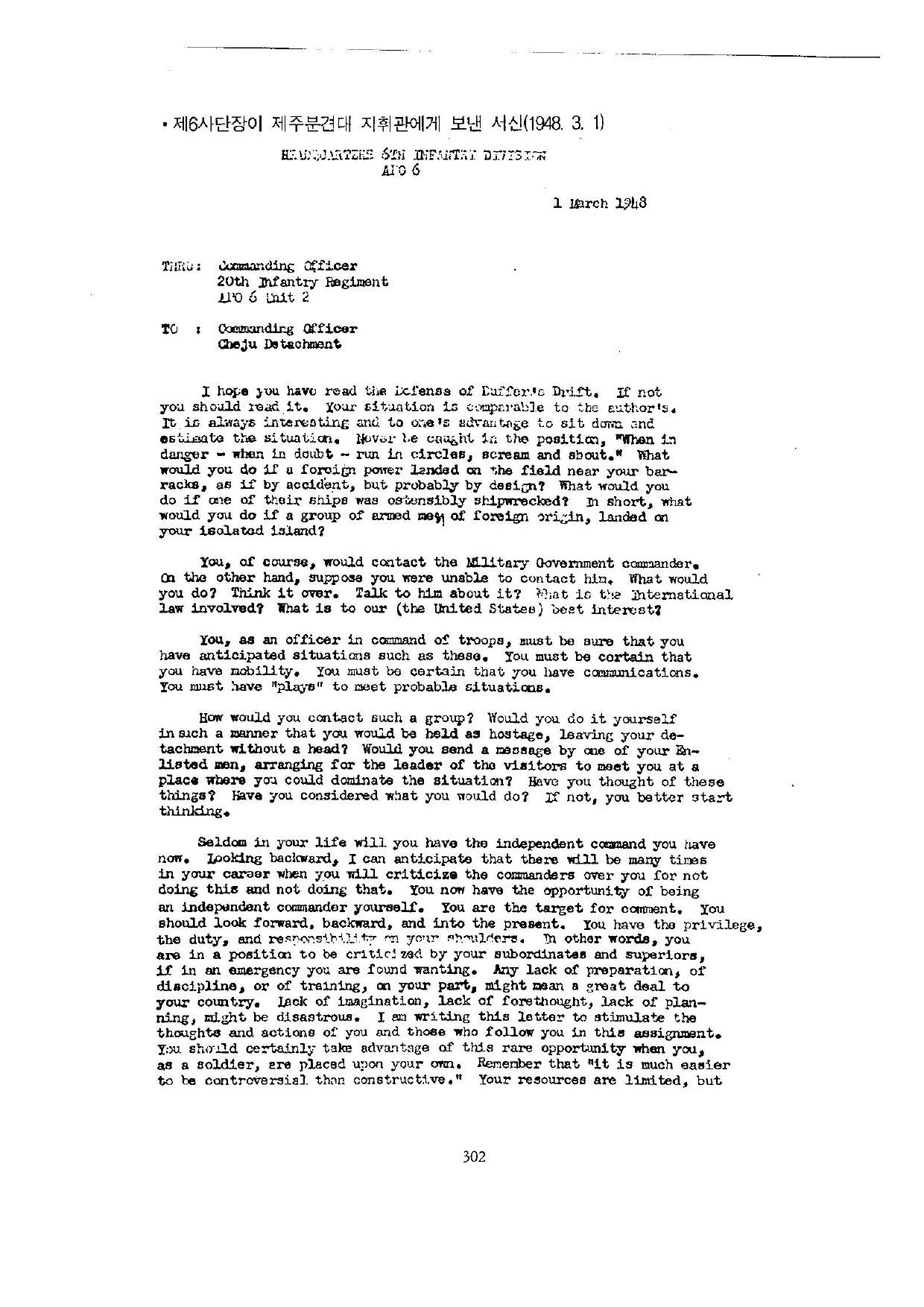
경유: 제20보병연대장
수신: 제주분견대 지휘관
본인은 귀하가 Defense of Duffer's Drift(위협이 예상되는 표류자 혹은 상륙자들에 대한 효과적인 방어지침서: 역주)를 정독하였기를 바란다. 만일 읽지 않았다면 귀하는 그것을 반드시 읽어야할 것이다. 귀하의 상황이 그 책의 저자와 유사하다. 앉아서 자신의 상황을 평가하는 것은 항상 흥미롭고 자신에게 이롭게 작용할 것이다. 결코 상황의 포로가 되지 말라. “위험에 처하거나 의심스러울 때 제자리를 맴돌면서 소리치고 외쳐라.” 만일 외세가 우연을 가장하여 일부러 귀하의 막사 근처의 전투지역에 상륙했다면 귀하는 어떻게 하겠는가? 만일 그들의 배 중 한 척이 표면상 난파되었다면 귀하는 어떻게 하겠는가? 한마디로 외국 국적의 무장세력이 귀하의 고립된 섬에 상륙하였다면 귀하는 어떻게 하겠는가?
물론 귀하는 군정중대장을 접촉할 것이다. 그렇지만 만일 귀하가 군정중대장에게 연락을 취할 수 없다는 것을 가정해 보라. 귀하는 어떻게 하겠는가? 심사숙고해 보라. 그와 그것에 관해서 논의하겠는가? 관련된 국제법은 무엇인가? 미국에게 가장 유익한 것은 무엇인가?
부대의 지휘를 맡고있는 귀하는 그러한 상황들을 확실히 예상하여야 한다. 귀하는 기동성과 통신을 확보하고 있음을 확실히 하여야 한다. 귀하는 있을 수 있는 상황을 대처하기 위하여 각본을 갖고 있어야 한다.
귀하는 그러한 외세를 어떻게 접촉할 것인가? 귀하는 귀하의 분견대를 지휘자 없는 상태로 남겨놓은 채 스스로 적의 볼모로 잡히는 방식으로 접촉하겠는가? 아니면 귀하는 부하 중 한 명을 시켜 귀하가 상황을 장악할 수 있는 장소에서 상대편의 지도자를 만나자고 제의하는 메시지를 보내겠는가? 귀하는 이러한 것들을 상정해 보았는가? 귀하는 어떻게 할 것인지 생각해 보았는가? 만일 생각해 보지 않았다면 생각해 보는 것이 좋을 것이다.
귀하의 인생에서 귀하는 좀처럼 지금과 같이 독립적인 지휘권을 갖기 어려울 것이다. 회고해 보면 본인은 귀하가 귀하의 장교생활에 있어서 귀하가 소속된 지휘관에 대하여 이러 저러한 것들이 잘못되었다고 비판한 적이 많았을 것이라고 판단된다. 이제 귀하가 스스로 독립적인 지휘관이 되는 기회를 가졌다. 귀하는 이제 비평의 표적이 되었다. 귀하는 현재 시점에서 전후를 살펴보아야 한다. 귀하는 귀하의 어깨에 특권과 의무와 책임을 짊어지고 있다. 다른 말로 표현하면 귀하는 만일 비상시에 미흡함이 발견된다면 귀하의 부하와 상관들로부터 비판을 당할 위치에 있는 것이다. 귀하에게 준비나 규율이나 훈련의 결여는 귀하의 국가에 엄청난 결과를 의미하게 될지도 모른다. 상상력과 혜안과 계획의 결핍은 재난이 될 것이다. 본인은 이 임무의 수행에 있어서 귀하를 따르는 부하들과 귀하의 행동과 생각을 자극시키기 위하여 이 편지를 쓰고 있다. 귀하는 군인으로서 스스로 이러한 보기 드문 기회를 활용하여야 한다. “발전적이기보다는 논쟁에 휩쓸리기 쉽다”는 것을 기억하라. 귀하의 자원은 한정되어 있지만, 혜안과 계획과 예상과 시간은 모두 귀하에게 무한정으로 가용하다. 귀하는 그것들을 활용하겠는가 말겠는가? 귀하는 그러한 기회를 좀처럼 얻기 힘들 것이다.
사단장 올랜도 워드(Orlando Ward) 소장
HEADQUARTERS 6TH INFANTRY DIVISION
APO 6
1 March 1948
THRU: Commanding Officer
20th Infantry Regiment
APO 6 Unit 2
TO : Commanding Officer
Cheju Detachment
I hope you have read the Defense of Duffer's Drift. If not you should read it. Your situation is comparable to the author's. It is always interesting and to one's advantage to sit down and estimate the situation. Never be caught in the position, "When in danger - when in doubt - run in circles, scream and shout." What would you do if a foreign power landed on the field near your barracks, as if by accident, but probably by design? What would you do if one of their ships was ostensibly shipwrecked? In short, what would you do if a group of armed men of foreign origin, landed on your isolated island?
You, of course, would contact the Military Government commander. On the other hand, suppose you were unable to contact him. What would you do? Think it over. Talk to him about it? What is the International law involved? What is to our (the United States) best interest?
You, as an officer in command of troops, must be sure that you have anticipated situations such as these. You must be certain that you have mobility. You must be certain that you have communications. You must have "plays" to meet probable situations.
How would you contact such a group? Would you do it yourself in such a manner that you would be held as hostage, leaving your detachment without a head? Would you send a message by one of your Enlisted men, arranging for the leader of the visitors to meet you at a place where you could dominate the situation? Have you thought of these things? Have you considered what you would do? If not, you better start thinking.
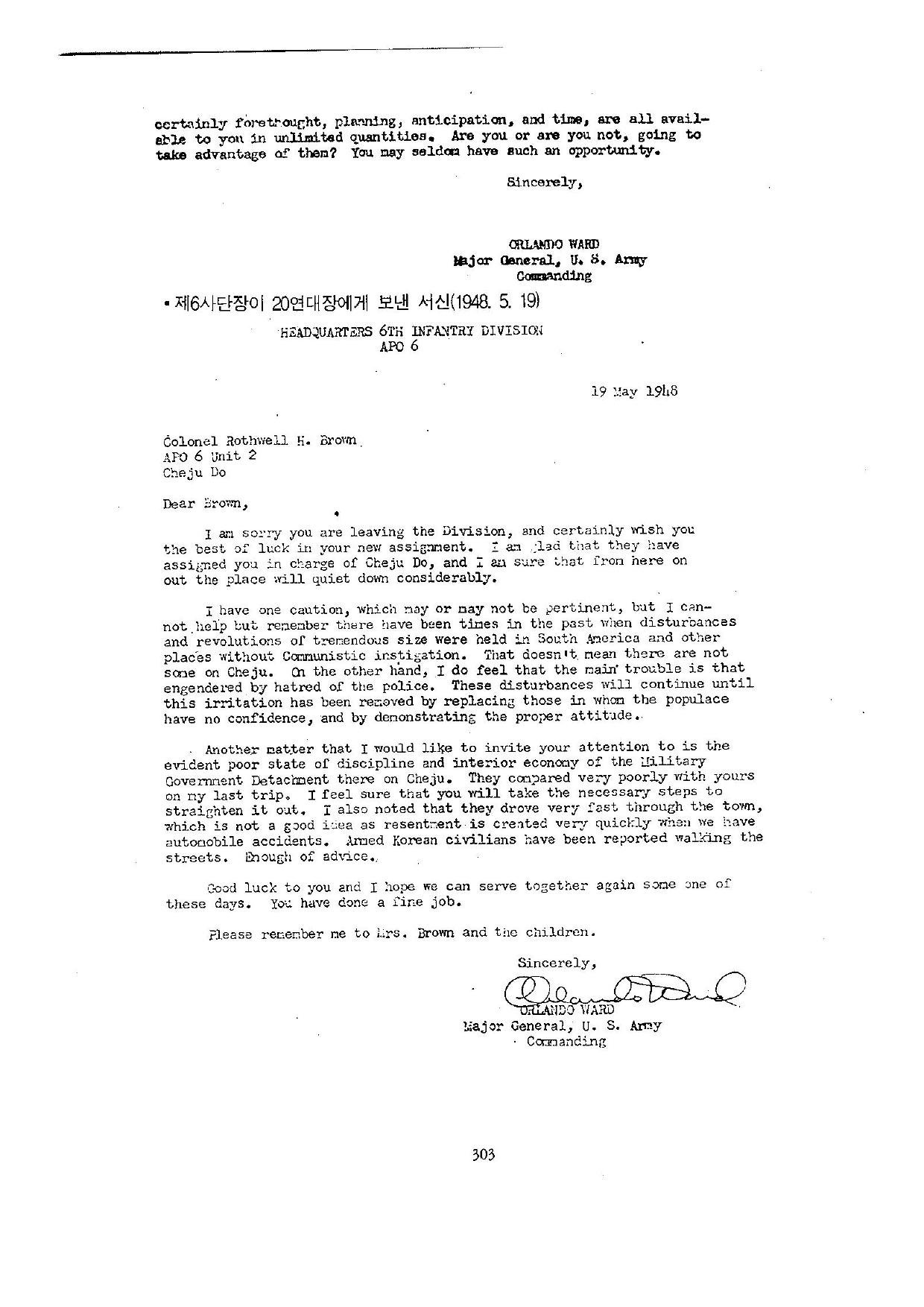
Seldom in your life will you have the independent command you have now. Looking backward, I can anticipate that there will be many times in your career when you will criticize the commanders over you for not doing this and not doing that. You now have the opportunity of being an independent commander yourself. You are the target for comment. You should look forward, backward, and into the present. You have the privilege, the duty, and responsibility on your shoulders. In other words, you are in a position to be criticized by your subordinates and superiors, if in an emergency you are found wanting. Any lack of preparation, of discipline, or of training, on your part, might mean a great deal to your country. Lack of imagination, lack of forethought, lack of planning, might be disastrous. I am writing this letter to stimulate the thoughts and actions of you and those who follow you in this assignment. You should certainly take advantage of this rare opportunity when you, as a soldier, are placed upon your own. Remember that "it is much easier to be controversial than constructive." Your resources are limited, but
certainly forethought, planning, anticipation, and time, are all available to you in unlimited quantities. Are you or are you not, going to take advantage of them? You may seldom have such an opportunity.
Sincerely,
ORLANDO WARD
Major General, U. S. Army
Commanding
출처:
제주4·3사건진상규명및희생자명예회복위원회 편,
『제주4·3사건자료집 8』 [미국자료편],
번역문 p.79
/ 원문 p.302–303.