<남조선과도정부 활동> 제32호
총괄
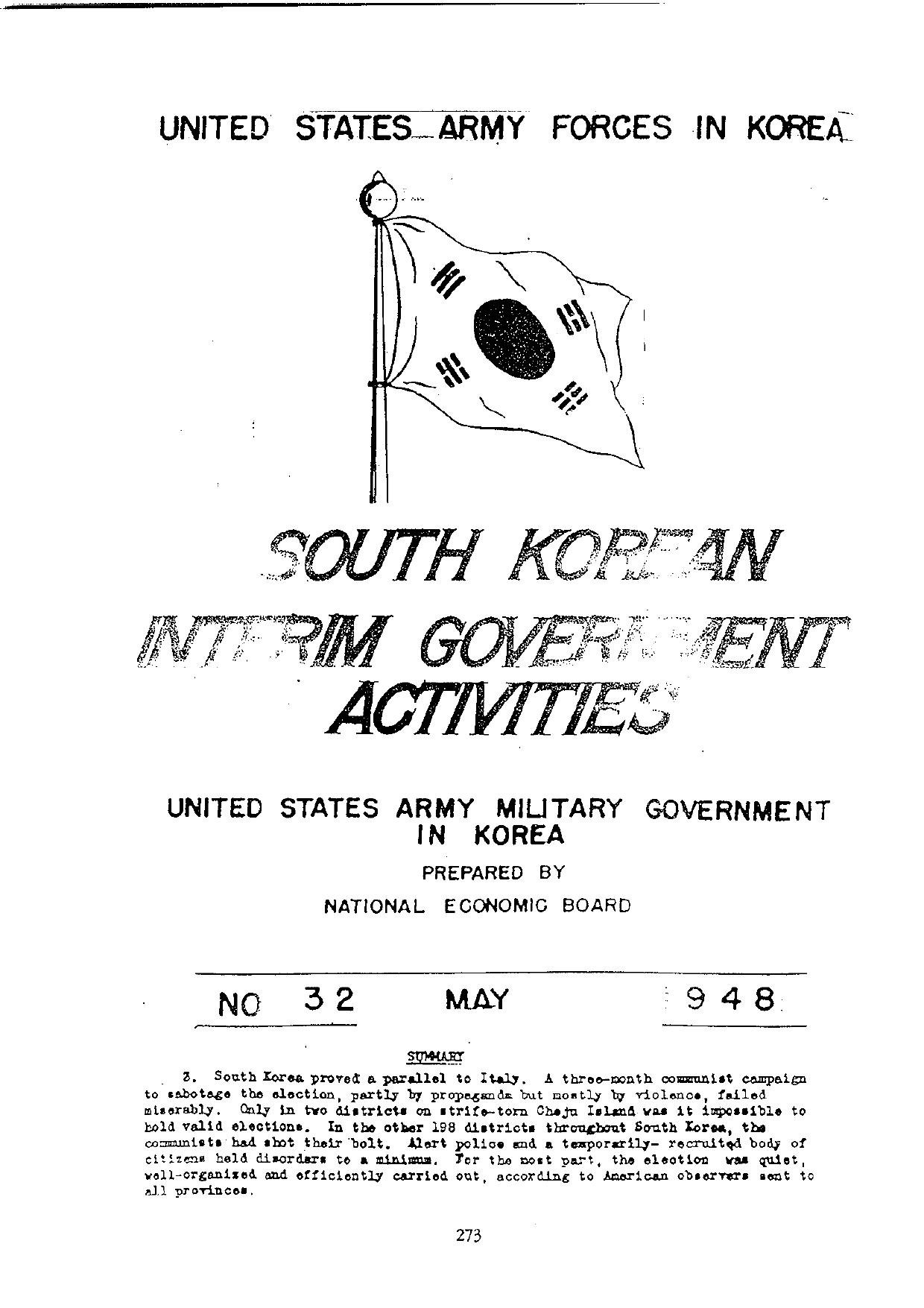
1. 남한은 이태리와 비슷한 것으로 입증됐다. 부분적으로는 선동을 동원하였지만 대부분은 폭력행위를 통한 선거를 방해하기 위한 3개월 동안의 공산주의자들의 투쟁은 비참한 실패로 끝났다. 투쟁으로 얼룩진 제주도의 2개 선거구만이 선거가 무효화됐을 뿐이다. 나머지 남한 전역의 198개 선거구에서 공산주의자들은 최선을 다했다. 비상근무에 돌입한 경찰과 일시적으로 모집된 민간인 조직이 소요를 최소화시켰다. 각 도에 파견된 미국인 관찰자들에 따르면 대체적으로 선거는 조용했고 잘 조직됐으며 효율적으로 실시됐다.
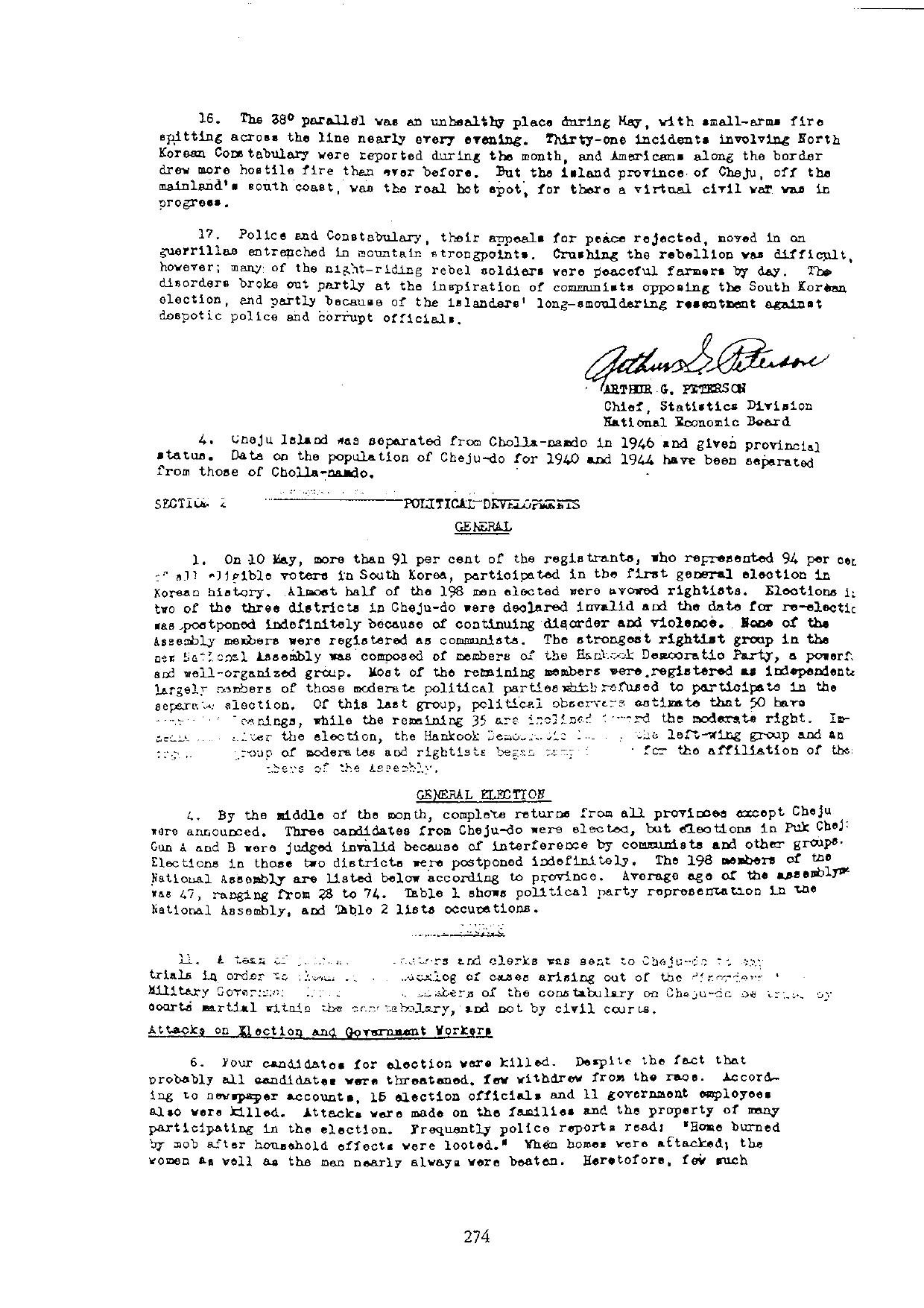
2. 5월 한달 동안 거의 매일 밤 38선을 넘어 쏟아지는 근거리 소총사격으로 인하여 38선은 위험한 지역이 됐다. 북한의 경비대가 연루된 31건의 사건이 이번 달에 보고됐고 38선에 근무하는 미군은 이전보다 더욱 적대적인 사격을 가하였다. 그러나 본토의 남해 해상에 위치한 제주도가 사실상의 내전상황에 돌입했기 때문에 가장 뜨거운 지역이 되었다.
3. 평화 호소를 거절당한 경찰과 경비대는 산의 거점지역 내 게릴라들의 참호에로 진입해 들어갔다. 그러나 폭동을 분쇄하는 것은 어려웠다. 야간에 움직이는 많은 반란군들은 낮에는 평화스런 농민들이다. 소요는 부분적으로 남한의 선거를 반대하는 공산주의자들의 선동으로 발생했고 부분적으로는 독재적인 경찰과 부패한 관리들에 대한 섬사람들의 마음속에 오래 쌓여있는 원한 때문이기도 했다.
(중략)
중앙경제위원회 통계국장 아더 피터슨(Arthur G. Peterson)
1. 기본측면
제주도(濟州島)는 1946년 전라남도에서 분리돼 도(道)의 지위가 주어졌다. 1940년과 1944년의 제주도의 인구자료는 전라남도의 인구자료에서 분리돼 왔다.
2. 정부 및 정치
1) 정치발전상황
⑴ 개요
남한내 전체 유권자의 94%에 해당하는 등록 유권자의 91% 이상이 한국 역사상 처음으로 실시된 5월 10일의 첫 총선거에 참가했다. 당선된 198명 가운데 거의 절반이 우익으로 인정됐다. 제주도의 3개 선거구 가운데 2개 선거구의 선거는 무효 처리됐고, 재선거일은 지속된 소요와 폭력행위 때문에 무기한 연기됐다. 국회의원 둥 아무도 공산주의자로 등록되어 있지 않았다. 신생 국회의 가장 강력한 우익집단은 세력이 크고 잘 조직된 정당인 한국민주당 소속원들로 구성됐다. 나머지 국회의원들의 대부분은 무소속과 단독선거 참가를 거부한 주로 중도 정당 소속원들이다. 정치 관찰자들은 이 마지막 집단 가운데 50명이 공산주의 쪽으로 기울고, 나머지 35명은 중도 우파 쪽으로 기울었다고 추정했다. 선거가 끝나자마자 한국민주당과 좌익단체, 중도파와 우파로 조직된 단체들은 국회내 무소속 의원들과의 제휴를 위한 활동을 시작했다.
⑵ 총선거
이 달 중순까지 제주도를 제외한 모든 지방의 완전한 선거결과가 발표됐다. 제주도의 후보자 3명이 선출됐지만 북제주군 갑과 을선거구의 선거는 공산주의자들과 기타 집단의 방해 때문에 무효 결정이 내려졌다. 이들 2개 선거구의 선거는 무기한 연기됐다. 도별 국회의원 198명의 명단이 아래 있다. 국회의원의 연령은 28살부터 74살까지이며, 평균 연령은 47살이다.
3. 사법관계
한국인 법정
판사와 검찰관, 서기들로 이뤄진 일행이 제주도의 소요로 일어난 사건들의 잔무(殘務)를 처리하기 위한 재판을 촉진하려고 제주도에 파견됐다. 군정청은 제주도의 국방경비대원들이 민간인 법정이 아닌 경비대내 군사법정에서 재판받을 것을 지시했다.
4. 국립경찰
1) 총선거
⑴ 선거 종사자 및 공무원 습격
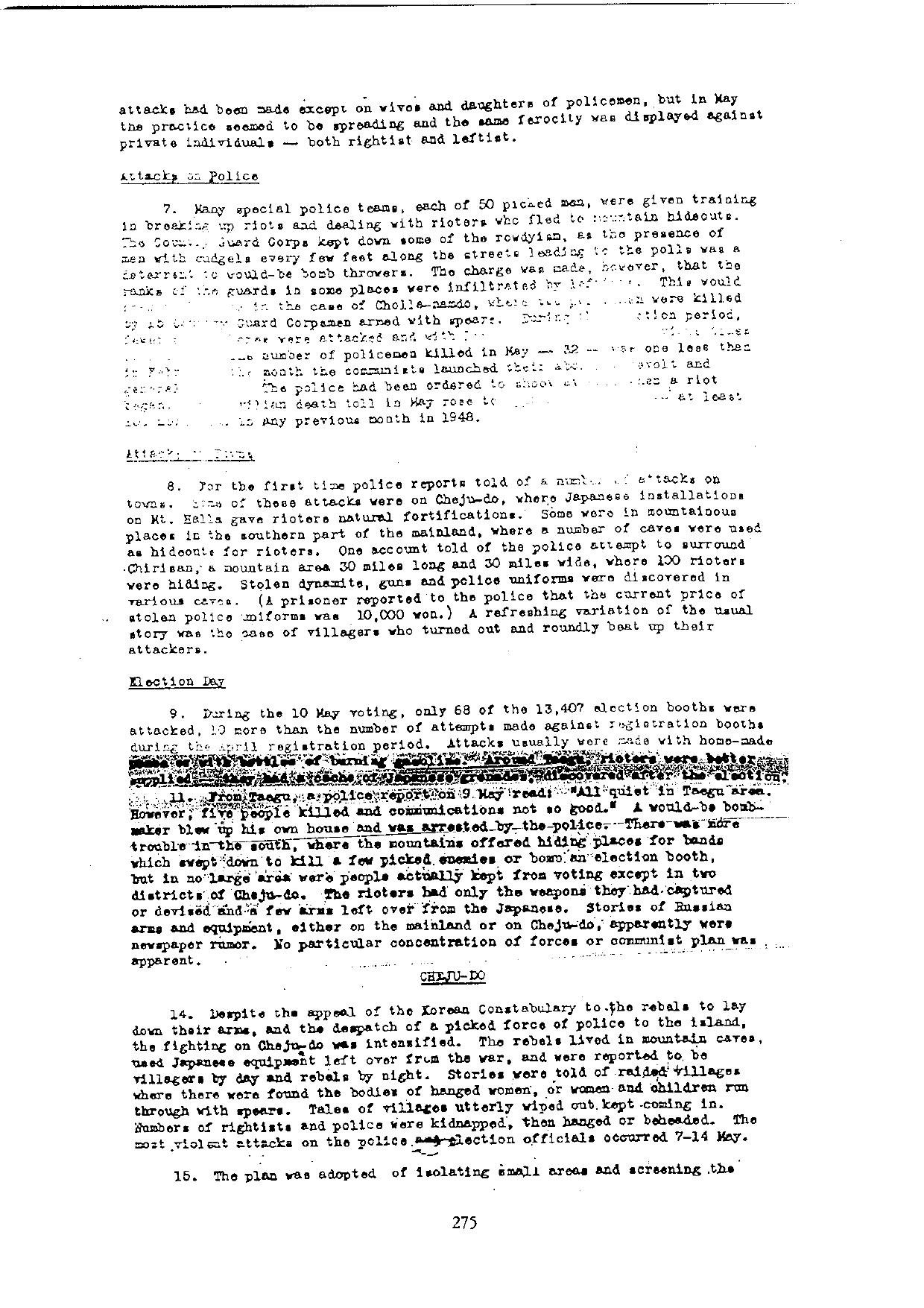
후보자 4명이 살해됐다. 아마도 모든 후보자들이 위협받은 사실에도 불구하고 극소수만이 후보를 사퇴했다. 신문의 집계에 따르면 선거관리위원 15명과 정부 고용인(공무원) 11명도 피살됐다. 선거에 참가한 많은 사람들의 가족과 재산에 대한 습격이 이뤄졌다. 경찰보고는 자주 “폭도들이 가재(家財)를 약탈한 뒤 주택을 방화했다”고 언급했다. 집을 습격하면 남자뿐 아니라 여자도 거의 항상 폭행을 당한다. 지금까지는 그와 같은 습격은 경찰관 부인과 딸들을 제외하고는 거의 없었으나 5월에는 이런 사건이 널리 퍼지고 같은 만행이 사적인 개인-좌‧우익 모두-에 대해서도 자행됐다.
⑵ 경찰 습격
팀당 50명으로 구성된 많은 특수경찰팀들은 폭동을 분쇄하고 산의 은신처로 도주한 폭도들을 처리하기 위해 훈련을 받았다. 자경단은 투표소를 따라 길가에 일정한 간격을 띄고 곤봉을 들고 경비함으로써 일부 난폭한 상태를 진정시켰다. 그러나 몇몇 지역에서 좌익들이 경비자 가운데 일부로 침투했다는 비난이 있다. 이는 창으로 무장한 15명의 자경단에게 경찰관 2명이 살해된 전라남도의 경우에는 사실인 것 같다. 선거기간에는 지서들이 덜 습격받았고 이전의 폭동 때보다도 덜 성공적이었다. 5월에 피살된 경찰관 수 32명은 공산주의자들이 실패한 반란과 총파업을 개시한 2월달에 비해 1명이 적은 것이다. 5월의 민간인 사망자 수는 약 275명으로 늘어났으며, 이는 적어도 1948년 이전의 어떠한 달에 비해서도 100명 이상 늘어난 것이다.
⑶ 도심지 습격
처음으로 경찰보고서는 도심지에 대한 여러 건의 공격을 보고했다. 이들 공격 가운데 일부는 제주도에서 있었다. 제주도의 한라산에 있는 일본인들의 시설은 폭도들에게 천연요새를 제공했다. 경찰의 공격 중 일부는 본토 남쪽 지방의 산간 지역에서 있었는데, 그곳에서는 많은 동굴이 폭도들의 은신처로 이용됐다. 한 보고서는 길이 30마일, 너비 30마일로 100여 명의 폭도가 숨어 있는 지리산을 포위하려는 경찰의 시도를 설명하고 있다. 훔친 다이너마이트와 총, 경찰제복들이 여러 동굴에서 발견됐다(한 포로는 훔친 경찰제복 값이 1만원이라고 경찰에게 보고했다). 일상적인 이야기 가운데 고무적인 변화는 마을사람들이 습격자들을 내쫓고 호되게 매질한 사건이었다는 것이었다.
⑷ 선거일
① 5월 10일 투표일에 전체 1만 3,407곳의 투표소 가운데 68곳만이 습격을 받았는데 이 숫자는 4월의 선거등록 기간에 등록사무소에 대한 시도건수보다 10건이 더 많은 숫자였다. 습격은 보통 집에서 만든 곤봉이나 불에 타는 가솔린 병으로 이뤄졌다. 대구 주변의 폭도들은 좀 더 나은 도구를 사용하였는데 그들은 선거 후에 발견된 일본제 수류탄 저장소를 보유하고 있었다.
② 대구에서 들어온 5월 9일자 경찰보고서는 “대구 지역에서는 모든 것이 조용했다. 그러나 5명이 죽고 통신이 좋지 않았다”고 보고했다. 폭탄을 만들려던 사람이 자신의 집을 날려버리고 경찰에 체포됐다. 반도들에게 은신처를 제공했던 산악지역이 많은 남부지방에서 더 많은 소요가 있었는데, 반도들은 미리 점찍어둔 적을 살해하거나 선거사무소를 폭파하기 위하여 휩쓸려 내려왔다. 그러나 제주도의 2개 선거구를 제외하고는 사실상 주민들이 투표를 하지 못한 지역은 없었다. 폭도들은 단지 자신들이 노획하거나 고안한 무기와 일본인들이 남긴 소량의 무기를 보유하고 있었다. 본토나 제주도의 러시아제 무기와 장비에 관한 이야기들은 확실히 신문상의 유언비어였다. 특별한 병력의 집결이나 공산주의자들의 계획이 명확하지 않았다.
⑸ 제주도
① 반도들에게 무기를 버리라는 국방경비대의 호소와 선발된 경찰부대의 제주도 급파에도 불구하고 제주도의 전투는 격렬해졌다. 반도들은 산간지역의 동굴에 살았고 전쟁 때 남겨진 일본군 장비를 사용했으며 낮에는 마을주민들로, 밤에는 반도들이 된다고 알려졌다. 습격당한 마을에는 교수당한 여자들의 시체와 창에 찔린 여자와 어린이들이 발견된다는 이야기들이 있다. 완전히 초토화된 마을들의 이야기가 계속 들어오고 있었다. 많은 우익인사들과 경찰이 납치돼 교수형에 처해지거나 목이 잘렸다. 경찰과 선거관리위원들에 대한 가장 격렬한 습격은 5월 7~14일에 일어났다.
② 소규모 지역들을 고립시키고 주민들을 심사하는 계획이 채택됐다.『서울타임즈』6월 4일자에 나타난 통위부 보고서는 3,126명이 구금돼 있다고 밝혔다. 중도『서울신문』은 5월 29일자에서 소요 발발 이후 사상자 수와 납치자 수를 600여 명으로 보도했다. 경무부장 조병옥이 5월 말 제주도 감찰여행에서 돌아오자마자 양측에서 경찰관 64명과 민간인 400명이 죽었다고 보고한 것으로 인용 보도됐다.
③ 신문 보도에 따르면 폭도들의 요구는 선거를 취소하고 경찰이 무장해제하는 것이다. 또 다른 보도는 제주도에 주둔하는 경찰과의 최초 충돌은 다른 지방사람들을 경찰직에 임명하고 경찰을 지원하기 위해 서북청년단 청년들이 들어오면서 시작됐다고 덧붙였다. 신문 보도는 계속해서 반도들이 3개월 동안 훈련을 받았고, 기습적으로 경찰을 장악했고 일본제 기관총을 갖고 있다고 주장했다.
④ 제주도의 대부분의 지역에서 5월 10일의 선거가 불가능했기 때문에 제주도의 3개 선거구 가운데 2개 선거구의 투표는 무기한 연기됐다.
5. 사회
1) 예방의약
전염병
5월 25일 몇 건의 천연두가 제주도의 국방경비대에서 발생했다고 보고됐다. 새로운 백신이 다음날 항공편으로 공수됐고 더 이상의 발생은 없었다.
UNITED STATES ARMY FORCES IN KOREA
SOUTH KOREAN
INTERIM GOVERNMENT
ACTIVITIES
UNITED STATES ARMY MILITARY GOVERNMENT
IN KOREA
PREPARED BY
NATIONAL ECONOMIC BOARD
NO 32 MAY 948
SUMMARY
3. South Korea proved a parallel to Italy. A three-month communist campaign to sabotage the election, partly by propaganda but mostly by violence, failed miserably. Only in two districts on strife-torn Cheju Island was it impossible to hold valid elections. In the other 198 districts throughout South Korea, the communists had shot their bolt. Alert police and a temporarily- recruited body of citizens held disorders to a minimum. For the most part, the election was quiet, well-organized and efficiently carried out, according to American observers sent to all provinces.
16. The 38° parallel was an unhealthy place during May, with small-arms fire spitting across the line nearly every evening. Thirty-one incidents involving North Korean Constabulary were reported during the month, and Americans along the border drew more hostile fire than ever before. But the island province of Cheju, off the mainland's south coast, was the real hot spot, for there a virtual civil war was in progress.
17. Police and Constabulary, their appeals for peace rejected, moved in on guerrillas entrenched in mountain strongpoints. Crushing the rebellion was difficult, however; many of the night-riding rebel soldiers were peaceful farmers by day. The disorders broke out partly at the inspiration of communists opposing the South Korean election, and partly because of the islanders' long-smouldering resentment against despotic police and corrupt officials.
Arthur G. Peterson
ARTHUR G. PETERSON
Chief, Statistics Division
National Economic Board
4. Cheju Island was separated from Cholla-namdo in 1946 and given provincial status. Data on the population of Cheju-do for 1940 and 1944 have been separated from those of Cholla-namdo.
SECTION 2 POLITICAL DEVELOPMENTS
GENERAL
1. On 10 May, more than 91 per cent of the registrants, who represented 94 per cen [illegible] eligible voters in South Korea, participated in the first general election in Korean history. Almost half of the 198 men elected were avowed rightists. Elections in two of the three districts in Cheju-do were declared invalid and the date for re-electic was postponed indefinitely because of continuing disorder and violence. None of the Assembly members were registered as communists. The strongest rightist group in the new National Assembly was composed of members of the Hankook Demoratio Party, a povert and well-organized group. Most of the remaining members were registered as independents largely members of those moderate political parties which refused to participate in the separate election. Of this last group, political observers estimate that 50 have [illegible] leanings, while the remaining 35 are inclined toward the moderate right. Im- [illegible] under the election, the Hankook Democ[illegible] [illegible] the left-wing group and an [illegible] group of moderates and rightists began [illegible] for the affiliation of the [illegible] members of the Assembly.
GENERAL ELECTION
4. By the middle of the month, complete returns from all provinces except Cheju were announced. Three candidates from Cheju-do were elected, but elections in Puk Chej: Gun A and B were judged invalid because of interference by communists and other groups. Elections in those two districts were postponed indefinitely. The 198 members of the National Assembly are listed below according to province. Average age of the assemblymen was 47, ranging from 28 to 74. Table 1 shows political party representation in the National Assembly, and Table 2 lists occupations.
[illegible]
11. A team of [illegible] [illegible] and clerks was sent to Cheju-do to [illegible] trials in order to [illegible] [illegible] of cases arising out of the [illegible] Military Government [illegible] [illegible] members of the constabulary on Cheju-do be [illegible] by courts martial within the [illegible] tabulary, and not by civil courts.
Attacks on Election and Government Workers
6. Four candidates for election were killed. Despite the fact that probably all candidates were threatened, few withdrew from the race. According to newspaper accounts, 15 election officials and 11 government employees also were killed. Attacks were made on the families and the property of many participating in the election. Frequently police reports read: "Home burned by mob after household effects were looted." When homes were attacked, the women as well as the men nearly always were beaten. Heretofore, few such attacks had been made except on wives and daughters of policemen, but in May the practice seemed to be spreading and the same ferocity was displayed against private individuals — both rightist and leftist.
Attacks on Police
7. Many special police teams, each of 50 picked men, were given training in breaking up riots and dealing with those who fled to mountain hideouts. The Const[illegible] Guard Corps kept down some of the rowdyism, as the presence of men with cudgels every few feet along the streets leading to the polls was a deterrent to would-be bomb throwers. The charge was made, however, that the ranks of the guards in some places were infiltrated by left[illegible]. This would [illegible] in the case of Cholla-namdo, where [illegible] [illegible] were killed by [illegible] Guard Corpsmen armed with spears. During [illegible] ction period, [illegible] were attacked and with [illegible] [illegible] [illegible] [illegible] number of policemen killed in May — 32 — was one less than [illegible] month the communists launched their [illegible] revolt and [illegible] The police had been ordered to shoot at [illegible] a riot [illegible] [illegible] death toll in May rose to [illegible] at least [illegible] is any previous month in 1948.
Attack on [illegible] India
8. For the first time police reports told of a number of attacks on towns. Some of these attacks were on Cheju-do, where Japanese installations on Mt. Halla gave rioters natural fortifications. Some were in mountainous places in the southern part of the mainland, where a number of caves were used as hideouts for rioters. One account told of the police attempt to surround Chirisan, a mountain area 30 miles long and 30 miles wide, where 100 rioters were hiding. Stolen dynamite, guns and police uniforms were discovered in various caves. (A prisoner reported to the police that the current price of stolen police uniforms was 10,000 won.) A refreshing variation of the usual story was the case of villagers who turned out and roundly beat up their attackers.
Election Day
9. During the 10 May voting, only 68 of the 13,407 election booths were attacked, 10 more than the number of attempts made against registration booths during the April registration period. Attacks usually were made with home-made [illegible] [illegible] [illegible] [illegible] [illegible] [illegible] the election. [illegible] from Taegu, a police report on 9 May read: "All quiet in Taegu area. However, five people killed and communications not so good." A would-be bomb-maker blew up his own house and was arrested by the police. There was more trouble in the south, where the mountains offered hiding places for bands which swept down to kill a few picked enemies or bomb an election booth, which swept down to kill a few picked enemies or bomb an election booth, but in no large area were people actually kept from voting except in two districts of Cheju-do. The rioters had only the weapons they had captured or devised and a few arms left over from the Japanese. Stories of Russian arms and equipment, either on the mainland or on Cheju-do, apparently were newspaper rumor. No particular concentration of forces or communist plan was apparent.
CHEJU-DO
14. Despite the appeal of the Korean Constabulary to the rebels to lay down their arms, and the despatch of a picked force of police to the island, the fighting on Cheju-do was intensified. The rebels lived in mountain caves, used Japanese equipment left over from the war, and were reported to be villagers by day and rebels by night. Stories were told of raided villages where there were found the bodies of hanged women, or women and children run through with spears. Tales of villages utterly wiped out kept coming in. Numbers of rightists and police were kidnapped, then hanged or beheaded. The most violent attacks on the police and election officials occurred 7-14 May.
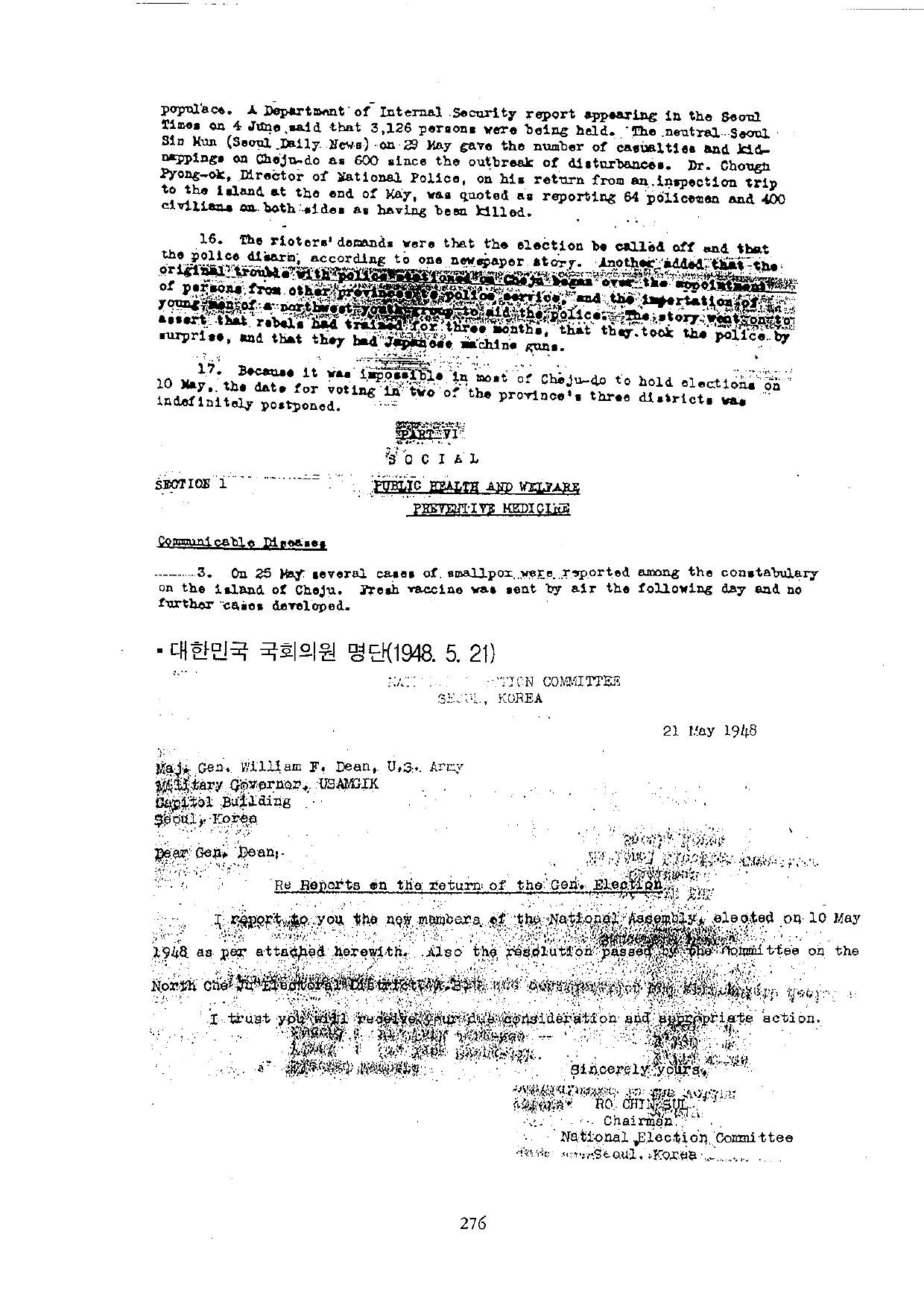
15. The plan was adopted of isolating small areas and screening the populace. A Department of Internal Security report appearing in the Seoul Times on 4 June said that 3,126 persons were being held. The neutral Seoul Sin Mun (Seoul Daily News) on 29 May gave the number of casualties and kidnappings on Cheju-do as 600 since the outbreak of disturbances. Dr. Chough Pyong-ok, Director of National Police, on his return from an inspection trip to the island at the end of May, was quoted as reporting 64 policemen and 400 civilians on both sides as having been killed.
16. The rioters' demands were that the election be called off and that the police disarm, according to one newspaper story. Another added that the original trouble was [illegible] police [illegible] over the appointments of persons from other [illegible] police service, and the importation of young [illegible] of a [illegible] the [illegible] aid the police; the story went on to assert that rebels had trained for three months, that they took the police by surprise, and that they had Japanese machine guns.
17. Because it was impossible in most of Cheju-do to hold elections on 10 May, the date for voting in two of the province's three districts was indefinitely postponed.
SOCIAL
SECTION 1
PUBLIC HEALTH AND WELFARE
PREVENTIVE MEDICINE
Communicable Diseases
3. On 25 May several cases of smallpox were reported among the constabulary on the island of Cheju. Fresh vaccine was sent by air the following day and no further cases developed.
출처:
제주4·3사건진상규명및희생자명예회복위원회 편,
『제주4·3사건자료집 9』 [미국자료편]
/ 원문 p.272–276.