제주도 사태에 대한 도지사 견해
주한미대사관
제목: 제주도 사태에 대한 도지사 견해
대사는 1949년 5월 31일자의 <급송문서> 제303호를 보낸 데 덧붙여 도지사 본인 설명 위주의 대화 비망록 사본을 국무부에 보내게 된 것을 영광스럽게 생각합니다.
대사는 도지사가 현재 제주도에 주둔중인 한국군들의 부정행위를 과장하고 있다고 믿고 있습니다. 그렇지 않다면 지사의 발언은 사실상 현 상황과 일치하는 것으로 보입니다.
첨부문서:
대화 비망록
1949년 6월 14일자 제63호
<첨부문서> 제주도 사태에 대한 도지사의 견해 (1949. 6. 16. 보고)
주한미대사관에서 보내는 1949년 6월 16일자 <급송문서> 제354호의 <첨부문서> 제1호
대화 비망록 제63호
1949년 6월 14일
제목: 제주도 사태에 대한 도지사의 견해
참석자 제주도지사 김용하, 통역 김씨(Mr. H. Kim), 드럼라이트, 가디너
시간: 오전 10시 30분
일자: 1949년 6월 13일
장소: 미대사관
(지사는 6월 15일에 제주도행 비행기를 확보할 수 있는 지 알아보기 위해서 대사관에 왔다)
지사는 주한미국육군이 자신과 부인이 6월 15일 제주도에 갈 수 있게 항공편을 제공할 수 있는지 묻는 것으로 말문을 열었다. 나는 그 문제를 드럼라이트(Drumright)와 상의할 것이지만 내 힘으로 모든 일을 도와주면 매우 기쁠 것이라고 말했다. 그리고 나서 나는 지사에게 제주도 사태가 어떻게 돌아가는 지 물었다.
지사는 제주도에서 일부 상황이 진전되고 있으며 게릴라-제주도 공산 게릴라 지도자 이덕구가 얼마전 죽었다-가 상당 부분 진압됐다고 말했다.
나는 제주도에 주둔하고 있는 한국군이 게릴라에 공세를 펴 우려되는 상황을 잠재운 것이 효과적이라는 말을 들었기 때문에 사태가 진압되고 있다는 말을 듣게 돼 기쁘다고 지사에게 말했다.
그리고 나서 나는 지사에게 제주도에서 지사를 가장 어렵게 하는 문제가 무엇인지를 말해 줄 수 있는지 물었다.
지사는 매우 심각한 두 가지 문제점을 지적했다. 제주도에 주둔하고 있는 한국군 제2연대가 주민들을 매우 고압적인 자세로 대하고 있다. 이것은 상당한 불만을 일으키고 있으며 지사는 이와 관련해 무슨 조처를 취하려고 노력하고 있다. 나는 지사가 국방부장관과 그 문제에 대해 의논했는지 물었고, 지사는 바로 오늘 아침 국방부장관과 의논했으며 국방부장관은 제2연대가 주민들에 대한 태도를 바꾸도록 하겠다고 약속했다고 말했다.
지사는 군대가 문제를 일으키는 것 외에도 서북청년단이 독단적이고 잔인한 태도로 제주도 주민들을 대하고 있으며 경찰국장도 이 단체의 일원이라는 사실이 더욱 사태를 악화시켰다고 말했다.
내가 지사에게 감자종묘가 제주도에 도착했는지 묻자 그는 농민들이 종묘를 받아 심고 있는 중이라고 대답했다. 사회부장관에게 요청한 구호기금을 받았는지에 대한 질문에 대해서는 그는 지금까지 받지 못했다고 답변했다. 사회부장관은 지사가 요청한 자금의 70%를 지원할 것을 임시 동의했었으나 나중에는 기획국 관리가 감축된 자금조차 정말로 필요한지를 증명하지 못하면 그것도 줄 수 없다고 말했다.
지사는 기획국 관리들이 조만간 긴축자금의 필요성을 확인하기 위해 제주도에 갈 것이라 덧붙였다(이 때 드럼라이트가 대화에 참석했다).
드럼라이트는 지사에게 피난민들이 중산간 지역으로 돌아가고 있는지 물었다. 지사는 일부 주민들은 돌아가기는 했으나 마을에서 얼마 떨어지지 않는 곳에 갔을 뿐이고 상당수의 주민들은 중산간 지역으로 돌아가지 않았다고 밝혔다.
드럼라이트 자신은 피난 농민들이 밭으로 돌아가는 게 절대 필요하다고 믿었는데 그렇게 되지 않은 것은 불행한 일이라고 말했다. 만일 그들이 돌아가지 않는다면 제주도의 식량공급에 문제가 있을 것이다.
(나는 드럼라이트에게 지사가 제2연대와 서북청년단에 대해 나에게 한 말을 다시 얘기했다). 드럼라이트는 지사에게 그 문제를 국방부장관과 의논했는지 물었으며 지사는 했다고 말했다. 지사는 현재 연대장인 함 대령이 전 연대장인 유 대령만큼 결코 좋은 사람이 아니라고 덧붙이고 함 대령이 전출되기를 바란다고 말했다. 지사는 항공편에 대한 자신의 요청을 환기시켰고 드럼라이트는 자신이 그 문제를 처리할 것이라고 말했다(마침내 지사를 위한 항공편이 주한미육군에 의해 마련됐다).
존 가디너(John P. Gardiner)
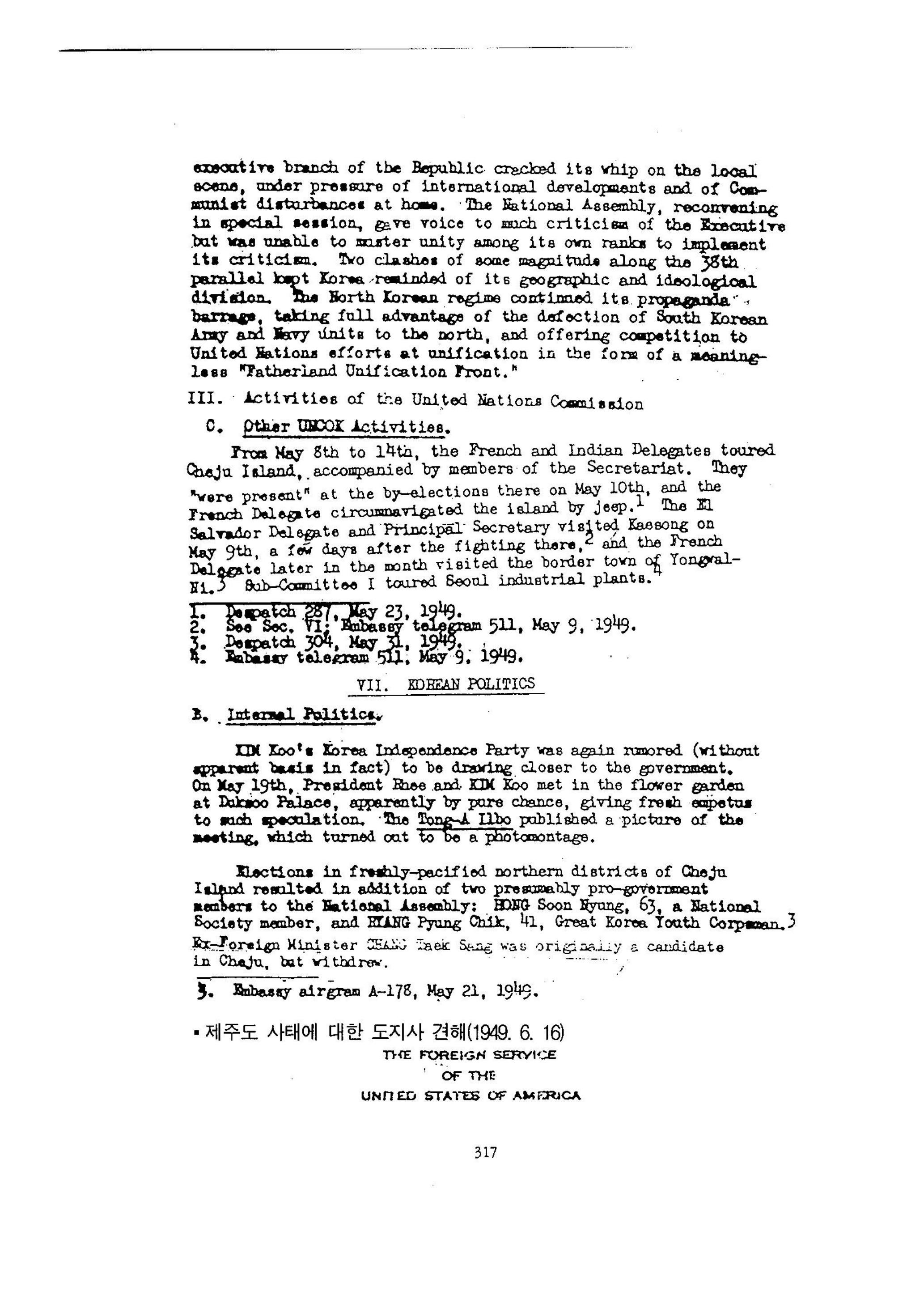
THE FOREIGN SERVICE
OF THE
UNITED STATES OF AMERICA
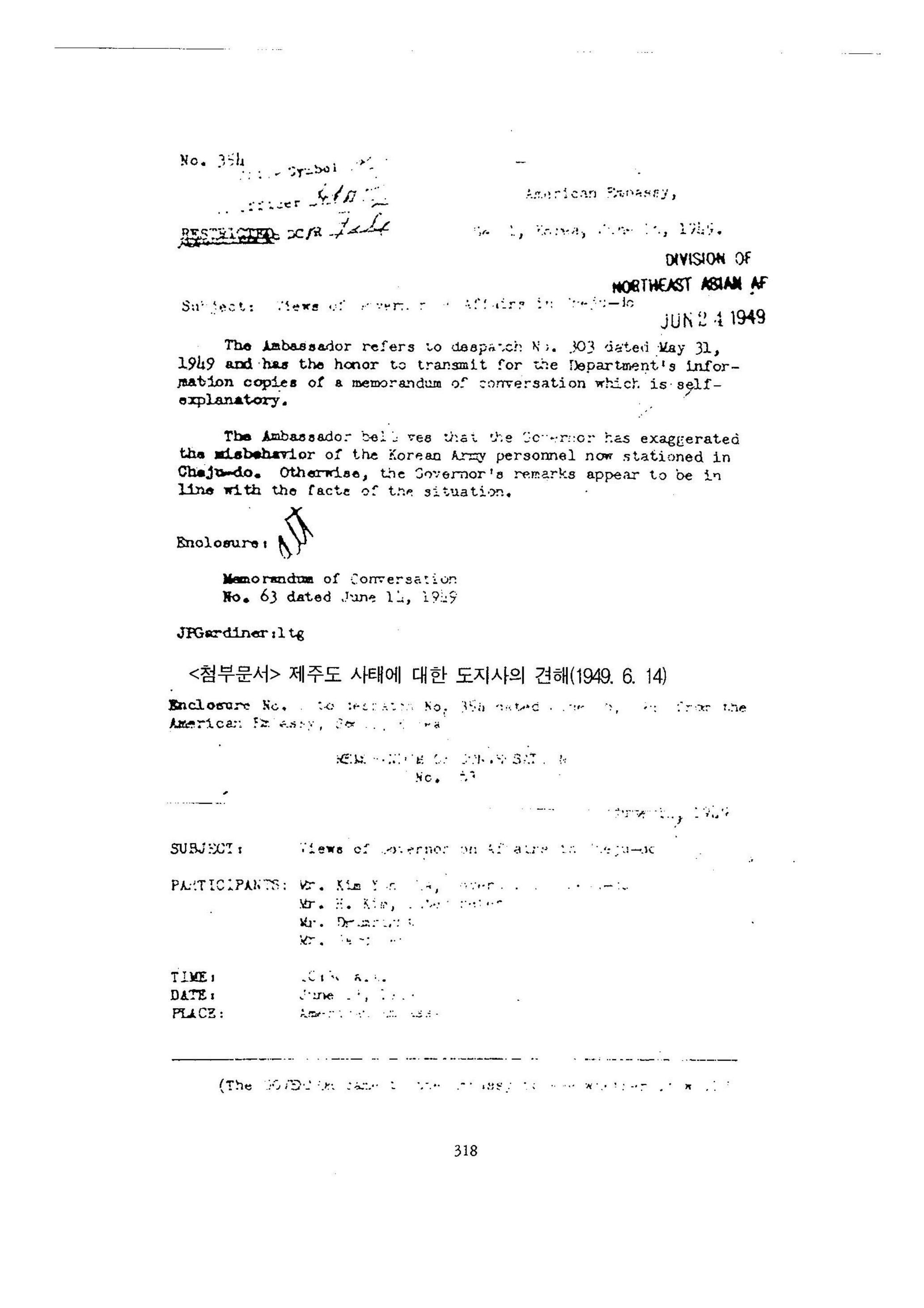
No. 354
[illegible] symbol [illegible]
[illegible] number 6/11 [illegible]
American Embassy,
RESTRICTED DC/R -[illegible]
[illegible] 1, Korea, [illegible] [illegible], 1949.
DIVISION OF
NORTHEAST ASIAN AF
Subject: Views of Governor of affairs in Cheju-do
JUN 2 4 1949
The Ambassador refers to despatch No. 303 dated May 31, 1949 and has the honor to transmit for the Department's information copies of a memorandum of conversation which is self-explanatory.
The Ambassador believes that the Governor has exaggerated the misbehavior of the Korean Army personnel now stationed in Cheju-do. Otherwise, the Governor's remarks appear to be in line with the facts of the situation.
Enclosure: [illegible]
Memorandum of Conversation
No. 63 dated June 14, 1949
JFGardiner:iltg
Enclosure No. [illegible] to despatch No. [illegible] dated [illegible] [illegible], [illegible] from the American Embassy, Seoul [illegible]
No. 43
[illegible] [illegible] copy [illegible]
SUBJECT: Views of Governor on affairs in Cheju-do
PARTICIPANTS: Mr. Kim Y.s [illegible], governor [illegible] [illegible]
Mr. H. Kim, [illegible] [illegible]
Mr. Drumright
Mr. [illegible] [illegible]
TIME: [illegible] A.M.
DATE: June 14, 1949
PLACE: American [illegible] [illegible]
(The [illegible] following [illegible] [illegible] [illegible] [illegible] [illegible] [illegible] x [illegible])
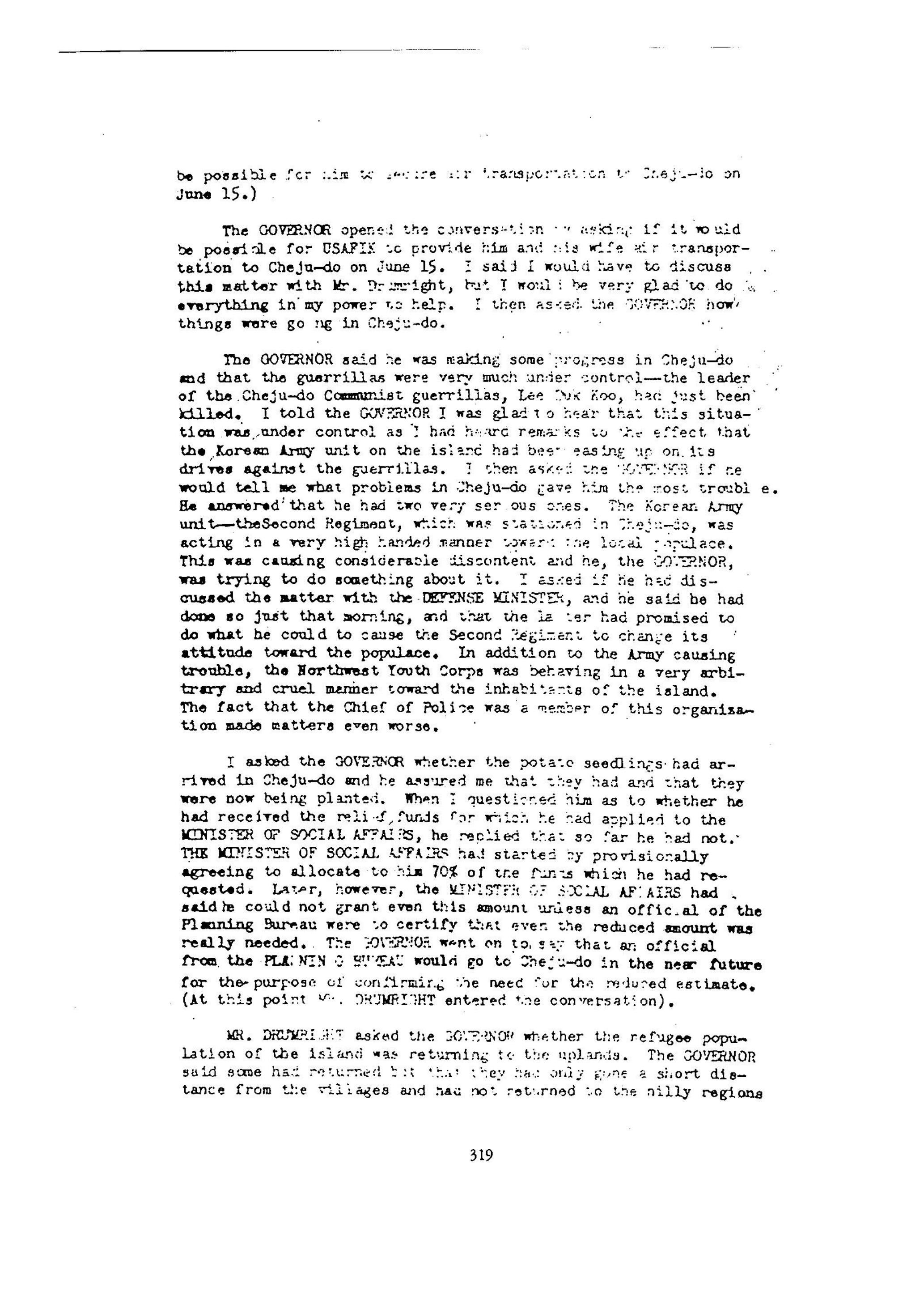
be possible for him to secure air transportation to Cheju-do on June 15.)
The GOVERNOR opened the conversation by asking if it would be possible for USAFIK to provide him and his wife air transportation to Cheju-do on June 15. I said I would have to discuss this matter with Mr. Drumright, but I would be very glad to do everything in my power to help. I then asked the GOVERNOR how things were go ng in Cheju-do.
The GOVERNOR said he was making some progress in Cheju-do and that the guerrillas were very much under control—the leader of the Cheju-do Communist guerrillas, Lee Duk Koo, had just been killed. I told the GOVERNOR I was glad to hear that this situation was under control as I had heard remarks to the effect that the Korean Army unit on the island had been easing up on its drives against the guerrillas. I then asked the GOVERNOR if he would tell me what problems in Cheju-do gave him the most trouble. He answered that he had two very ser ous ones. The Korean Army unit—theSecond Regiment, which was stationed in Cheju-do, was acting in a very high handed manner toward the local populace. This was causing considerable discontent and he, the GOVERNOR, was trying to do something about it. I asked if he had discussed the matter with the DEFENSE MINISTER, and he said he had done so just that morning, and that the la ter had promised to do what he could to cause the Second Regiment to change its attitude toward the populace. In addition to the Army causing trouble, the Northwest Youth Corps was behaving in a very arbitrary and cruel manner toward the inhabitants of the island. The fact that the Chief of Police was a member of this organization made matters even worse.
I asked the GOVERNOR whether the potato seedlings had arrived in Cheju-do and he assured me that they had and that they were now being planted. When I questioned him as to whether he had received the relief funds for which he had applied to the MINISTER OF SOCIAL AFFAIRS, he replied that so far he had not. THE MINISTER OF SOCIAL AFFAIRS had started by provisionally agreeing to allocate to him 70% of the funds which he had requested. Later, however, the MINISTER OF SOCIAL AFFAIRS had said he could not grant even this amount unless an official of the Planning Bureau were to certify that even the reduced amount was really needed. The GOVERNOR went on to say that an official from the PLANNING BUREAU would go to Cheju-do in the near future for the purpose of confirming the need for the reduced estimate. (At this point Mr. DRUMRIGHT entered the conversation).
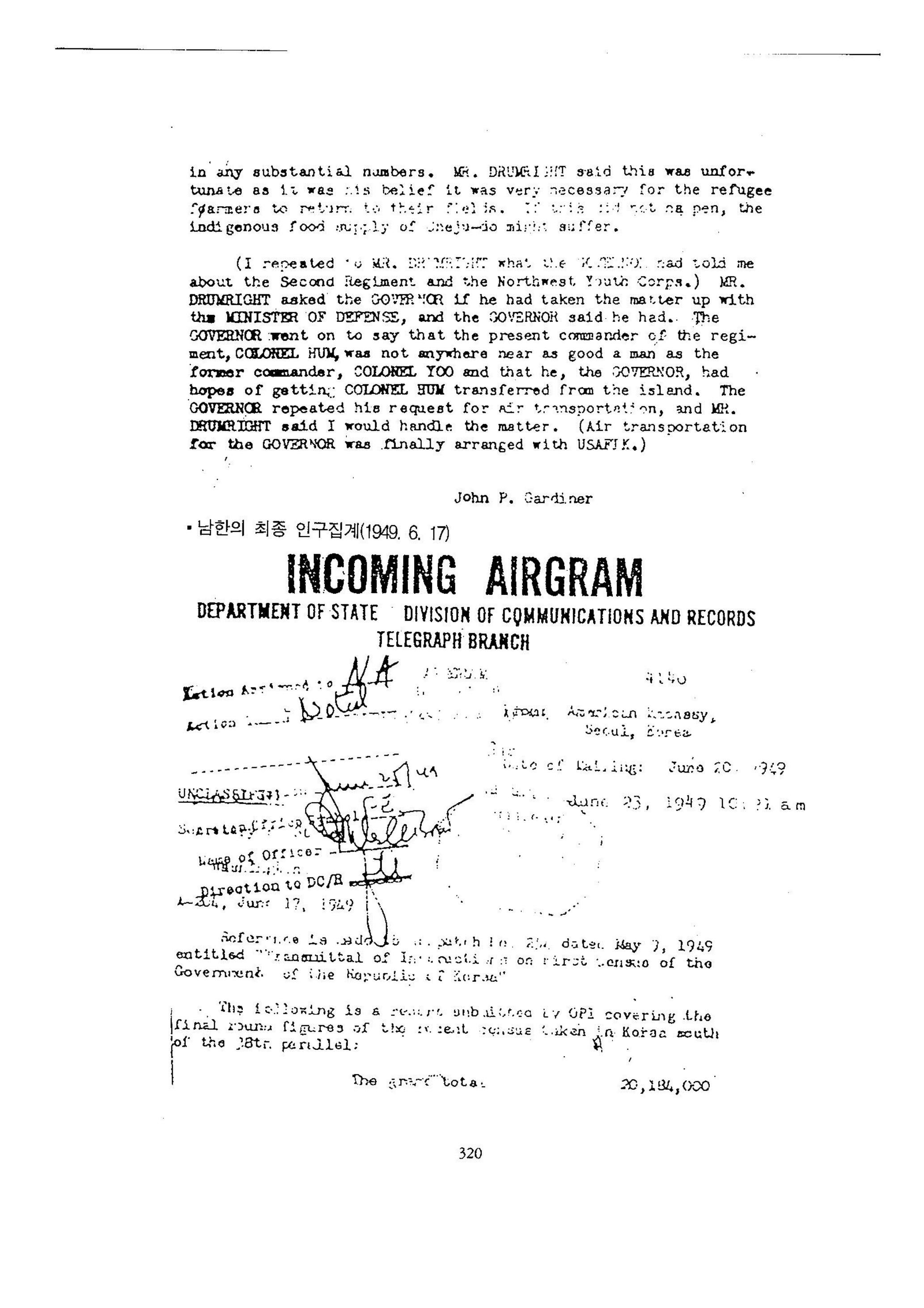
MR. DRUMRIGHT asked the GOVERNOR whether the refugee population of the island was returning to the uplands. The GOVERNOR said some had returned but that they had only gone a short distance from the villages and had not returned to the hilly regions in any substantial numbers. MR. DRUMRIGHT said this was unfortunate as it was his belief it was very necessary for the refugee farmers to return to their fields. In this it not ng pen, the indigenous food supply of Cheju-do might suffer.
(I repeated to MR. DRUMRIGHT what the KOMMOY had told me about the Second Regiment and the Northwest Youth Corps.) MR. DRUMRIGHT asked the GOVERNOR if he had taken the matter up with the MINISTER OF DEFENSE, and the GOVERNOR said he had. The GOVERNOR went on to say that the present commander of the regiment, COLONEL HUM, was not anywhere near as good a man as the former commander, COLONEL YOO and that he, the GOVERNOR, had hopes of getting COLONEL HUM transferred from the island. The GOVERNOR repeated his request for air transportation, and MR. DRUMRIGHT said I would handle the matter. (Air transportation for the GOVERNOR was finally arranged with USAFIK.)
John P. Gardiner
출처:
제주4·3사건진상규명및희생자명예회복위원회 편,
『제주4·3사건자료집 11』 [미국자료편],
번역문 p.128–118
/ 원문 p.317–320 / No. 354.