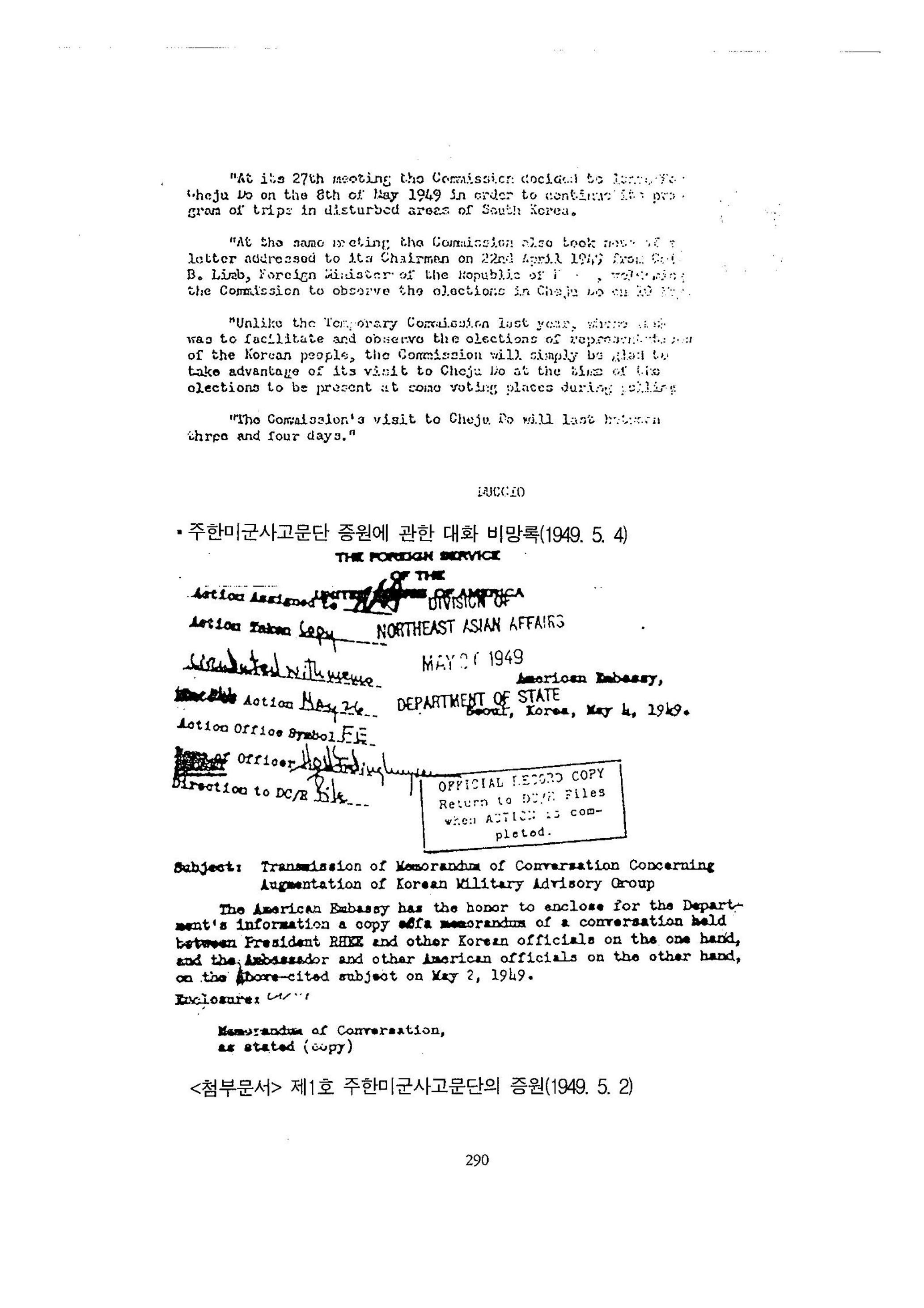
주한미대사관
제목: 주한미군사고문단 증원에 관한 대화 비망록 송달
주한미대사관은 1949년 5월 12일 위에 언급한 주제에 관해 이 대통령 및 한국의 관리들과 대사, 그리고 미국의 관리들간에 열린 대화 비망록 사본을 국무부 정보용으로 동봉하게 돼 영광입니다.
첨부문서: 위에 언급한 <대화 비망록>
<첨부문서> 제1호: 주한미군사고문단의 증원 (1949. 5. 4. 보고)
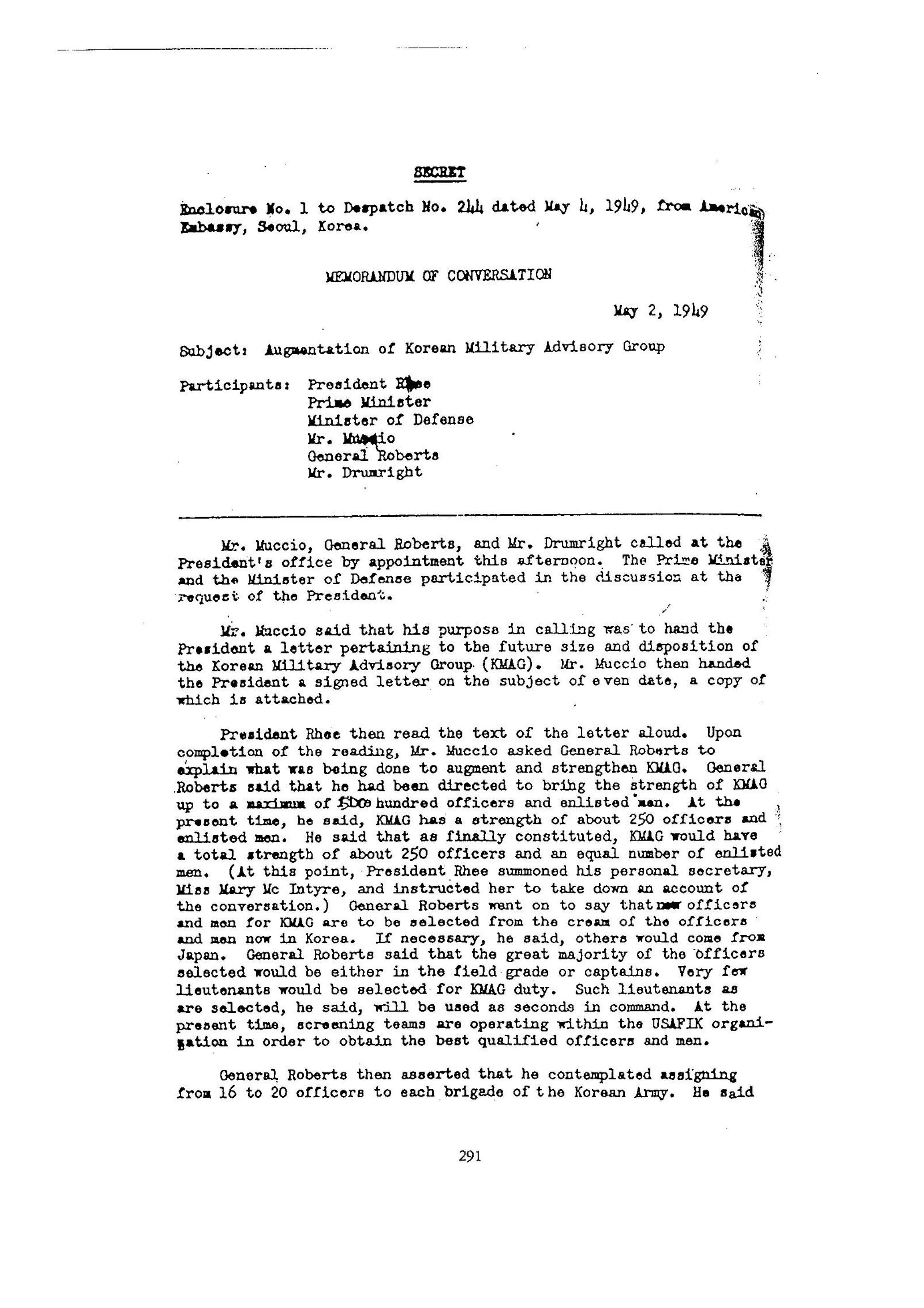
대화 비망록
1949년 5월 2일
제목: 주한미군사고문단의 증원
참석자: 이 대통령, 국무총리, 국방부장관, 무쵸, 로버츠 장군, 드럼라이트
무쵸(Muccio), 로버츠(W. L. Roberts) 장군, 드럼라이트(Drumright)는 약속대로 이날 오후 대통령 집무실을 예방했습니다. 국무총리와 국방부장관도 대통령의 요청에 따라 참석했습니다.
무쵸는 주한미군사고문단의 향후 규모와 배치에 관한 서한을 대통령에게 넘겨주기 위해 예방했다고 밝히고 나서 서명된 서한을 대통령에게 건넸습니다. 이 서한 사본은 본 비망록에 첨부됐습니다.
그리고 나서 이 대통령은 서한을 큰 소리로 읽었습니다. 서한을 다 읽자 무쵸는 로버츠 장군에게 주한미군사고문단을 증원하고 강화하기 위해 했던 일을 설명하도록 요청했습니다.
로버츠 장군은 주한미군사고문단의 병력을 장교와 사병을 포함해 최대 500명까지 증원하도록 지시받았다고 말했습니다. 그는 현재 주한미군사고문단 병력이 장교와 사병을 포함해 약 250여명이라고 밝혔습니다. 최종적으로 구성되면 주한미군사고문단의 총병력규모는 장교 250여명과 같은 수의 사병으로 구성될 것입니다(이 때 이 대통령은 개인비서인 메리 맥킨타이어(Mary McIntyre) 양을 불러 회의를 기록하도록 지시했습니다).
로버츠 장군은 계속해서 주한미군사고문단의 새로운 장교와 사병들은 현재 한국에 있는 장교와 사병들 가운데 가장 우수한 군인들로 선발할 것이라고 말했습니다.
그는 필요하다면 일부 병력은 일본에서 올 것이라고 말했습니다. 로버츠 장군은 대부분의 장교들은 영관급이나 대위급을 선발할 것이며 소위나 중위는 거의 선발하지 않겠다고 밝혔습니다. 그는 이와 같이 선발된 소위나 중위는 부지휘관으로 활용될 것이라고 말했습니다.
현재 최고의 자질을 갖고 있는 장교와 사병을 선발하기 위해 심사팀들이 주한미육군사령부 내에서 활동하고 있다고 밝혔습니다.
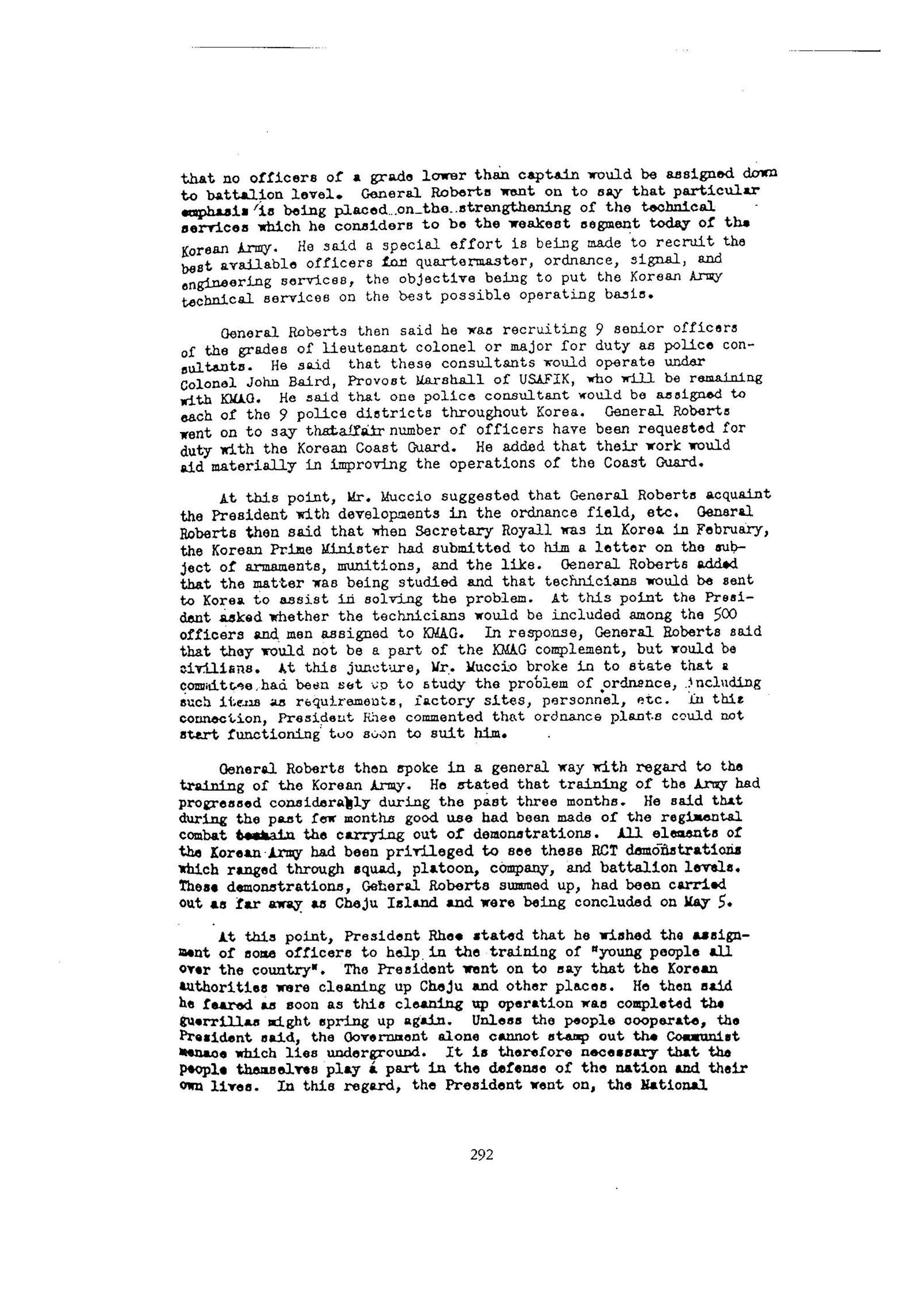
로버츠 장군은 그리고 나서 한국군 각 여단에 16~20명의 장교를 배치하는 문제를 심사숙고했다고 주장했습니다. 그는 대대 단위에는 대위 이하의 장교를 배치하지 않을 것이라고 말했습니다.
로버츠 장군은 이어 오늘날 한국군의 가장 취약한 문제라고 생각하는 기술적인 사항을 특히 강조했습니다. 그는 한국군의 기술적인 사항을 가능한 한 가장 훌륭한 운영기준으로 만들기 위해 병참, 병기, 통신, 공병분야에서 활용할 수 있는 최고의 장교들을 모집하는데 특단의 노력을 기울이고 있다고 말했습니다.
로버츠 장군은 그리고 나서 경찰 자문역으로 주한미군사고문단에 복무할 중령과 소령급의 고위 장교 9명을 모집중이라고 밝혔습니다.
그는 이들 자문역들은 주한미군사고문단에 잔류할 주한미육군사령부 헌병대 사령관 존 베어드(John Baird) 대령의 지휘 아래 활동할 것이라고 말했습니다.
로버츠 장군은 이어 꽤 많은 수의 장교들이 한국의 해안경비대에 복무할 것이라고 말했습니다. 그는 이들의 업무는 해안경비대의 작전을 개선시키는데 실질적으로 도움이 될 것이라고 덧붙였습니다. 이 때 무쵸는 로버츠 장군에게 병기분야 등의 발전에 대해서도 대통령에게 설명해줄 것을 제안했습니다.
로버츠 장군은 그리고 나서 로얄 장관이 2월 방한했을 때 한국의 국무총리가 그에게 장비와 탄약과 같은 문제에 관한 서한을 전달했었다고 말했습니다.
로버츠 장군은 그 문제에 대해 연구중이고 문제해결을 돕기 위해 전문가들이 한국에 파견될 것이라고 덧붙였습니다.
이 때 대통령은 전문가들이 주한미군사고문단에 배치될 500명의 장교와 사병 속에 포함될 것인지에 대해 물었습니다.
이에 대해 로버츠 장군은 그들은 주한미군사고문단의 구성원이 아니라 민간인일 것이라고 말했습니다.
바로 이 때 무쵸가 필요 물품과 공장 위치, 인력 등과 같은 사항을 포함해 병기문제를 연구하기 위한 위원회가 구성됐다고 말하면서 끼여들었습니다. 이와 관련해 이 대통령은 병기공장이 최대한 빨리 가동되기를 바란다고 말했습니다.
로버츠 장군은 그리고 나서 한국군의 훈련에 관해 일반적인 사항을 이야기했습니다. 그는 한국군 훈련이 지난 3개월 동안 상당히 진전됐다고 언급했습니다. 그는 지난 몇 달 동안 작전을 수행하면서 연대전투단(RCT, 연대특수임무부대, 보병연대를 근간으로 전투단을 구성한 것으로 제한된 독립작전을 수행할 수 있도록 포병, 기갑 및 공병 등이 증강된 특수임무부대: 역주)을 훌륭하게 활용했다고 말했습니다.
모든 한국군들은 분대, 소대, 중대, 대대급에 걸쳐 이들 연대전투단의 작전을 보는 특권을 가졌다고 말했습니다. 로버츠 장군은 이들 작전들이 제주도처럼 먼 곳에서 수행됐으며 5월 5일 끝날 것이라고 말을 맺었습니다.
이 점에 관해 이 대통령은 ‘전국의 젊은이들’을 훈련시키는 것을 돕기 위해 일부 장교를 배치하기를 바란다고 언급했습니다. 대통령은 이어 한국 당국은 제주도와 몇몇 지역에 대해 소탕작전을 전개하고 있다고 말하고 이 소탕작전이 끝나자마자 게릴라들이 다시 활동을 재개할지도 모른다며 우려하고 있다고 밝혔습니다.
대통령은 국민들이 협조하지 않는 한 정부 단독으로는 지하에 있는 공산주의자들의 위협을 근절할 수 없다고 말했습니다. 그러므로 국민들 스스로가 국가방위와 자신들의 생명을 보호하기 위한 역할을 하는 것이 필요하다고 말했습니다.
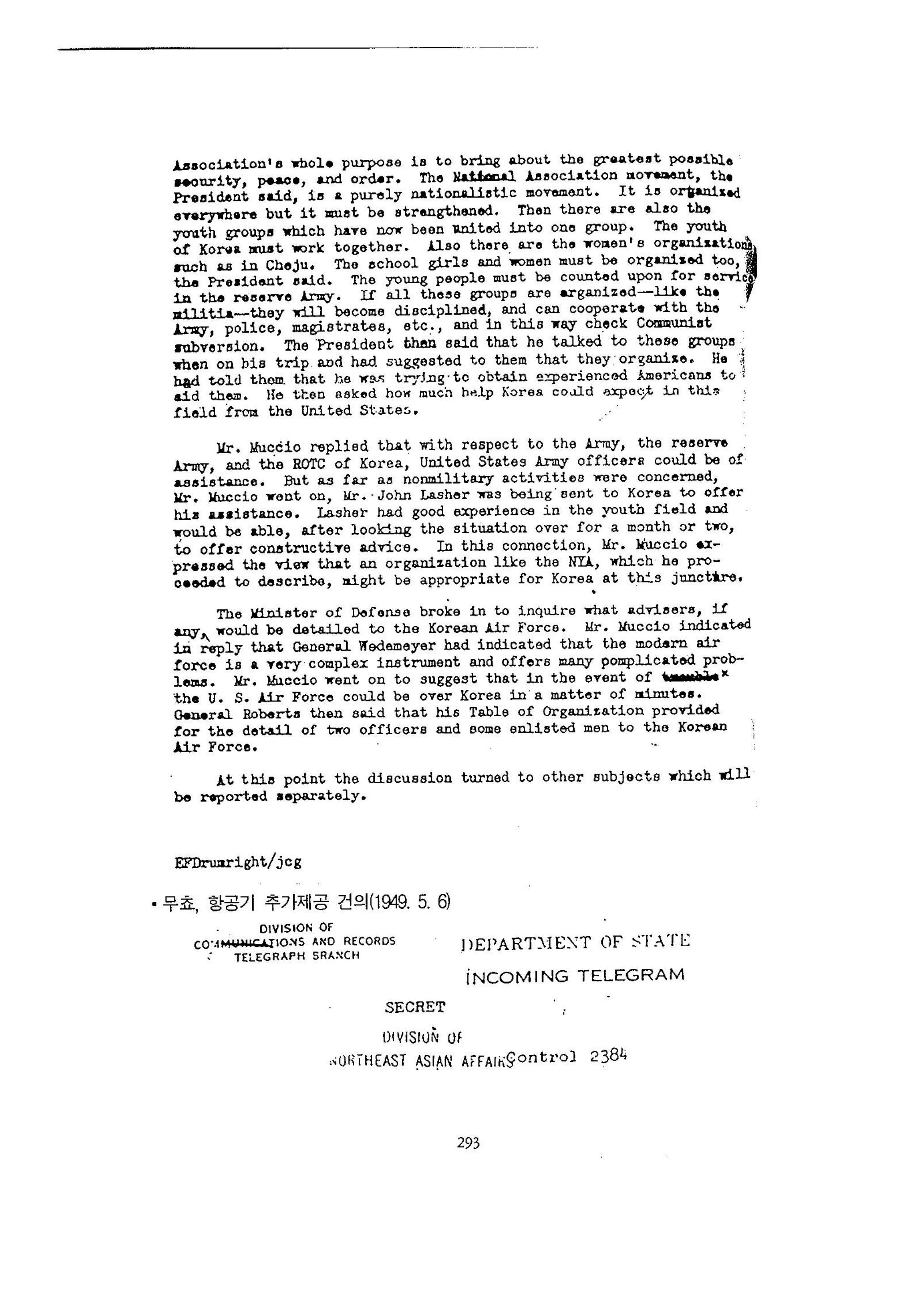
이와 관련해 대통령은 국민회의 전적인 목적은 가능한 최대한의 안보와 평화, 질서를 실현하는 것이라고 말했습니다.
대통령은 국민회(독립촉성국민회의: 역주) 운동은 순수한 민족운동이라고 말하고 전국에 조직되고 있기는 하지만 더 강화돼야 한다고 밝혔습니다. 그리고 나서 단일체로 통합하고 있는 청년단체들이 있으며 한국의 청년들은 함께 일해야 한다고 말했습니다. 또한 제주도에서와 같은 여성조직들도 있습니다. 여학생들과 여성들 역시 조직돼야 한다고 대통령은 말했습니다. 젊은이들은 예비군 복무를 해야 합니다.
모든 이들 단체들이 조직되면-민병대처럼-그들은 훈련을 받을 것이고 군과 경찰, 치안판사 등과 협력할 수 있으며 이런 방법으로 공산파괴분자들을 조사할 수 있다고 말했습니다.
그는 여행도중 이들 단체들과 얘기를 나눴고 조직화할 것을 제안했다고 밝히고 이들에게 경험있는 미국인들이 원조할 것이라고 말했습니다. 그리고 나서 그는 이 분야에서 미국이 얼마나 많이 한국을 도와줄 것을 기대할 수 있는가 라고 물었습니다.
무쵸는 한국군과 예비군, 학군단(ROTC)과 관련해 미군 장교들이 도움을 줄 수 있다고 답변했습니다.
그러나 무쵸는 이어 비군사활동에 관한 한 존 라셔(John Lasher)가 도움을 주기 위해 한국에 파견될 것이라고 말했습니다. 라셔는 청년분야에서 많은 경험을 갖고 있으며 1~2개월 동안 상황을 지켜본 뒤 건설적인 자문을 제공할 수 있을 것입니다.
이와 관련해 무쵸는 자신이 설명한 바 있는 청년단(NYA)과 같은 조직이 이 중요한 때에 한국에 적당할 것이라는 견해를 나타냈습니다.
국방부장관은 만약 있다면 고문관들이 한국 공군에 파견될 것인지에 대해 물으며 끼여들었습니다. 무쵸는 웨드마이어 장군이 현대 공군은 매우 복잡한 도구이고 많은 문제를 야기한다고 지적했다고 답변했습니다.
무쵸는 미국 공군이 한국에 도달하는데 수분밖에 걸리지 않을 것이라고 말을 꺼냈습니다. 그리고 나서 로버츠 장군은 2명의 장교와 일부 사병들에 관한 내역을 담은 조직표를 한국 공군에 제공했다고 말했습니다. 이 때 토론은 다른 주제로 넘어갔고 이에 대해서는 별도로 보고할 것입니다.
드럼라이트(Drumright)
THE FOREIGN SERVICE
Action Assigned [illegible] OF THE DIVISION OF [illegible]
Action Taken Copy NORTHEAST ASIAN AFFAIRS
[illegible] nil [illegible] MAY 2 f 1949
American Embassy,
[illegible] Action May 24 DEPARTMENT OF STATE
Seoul, Korea, May 4, 1949.
Action Office Symbol FE
[illegible] Officer [illegible]
Direction to DC/R [illegible] OFFICIAL RECORD COPY
Return to DC/R Files
when Action is com-
pleted.
Subject: Transmission of Memorandum of Conversation Concerning
Augmentation of Korean Military Advisory Group
The American Embassy has the honor to enclose for the Depart-
ment's information a copy of a memorandum of a conversation held
between President RHEE and other Korean officials on the one hand,
and the Ambassador and other American officials on the other hand,
on the above-cited subject on May 2, 1949.
Enclosures: C/~/
Memorandum of Conversation,
as stated (copy)
<첨부문서> 제1호 주한미군사고문단의 증원(1949. 5. 2)
SECRET
Enclosure No. 1 to Despatch No. 244 dated May 4, 1949, from American Embassy, Seoul, Korea.
MEMORANDUM OF CONVERSATION
May 2, 1949
Subject: Augmentation of Korean Military Advisory Group
Participants: President Rhee
Prime Minister
Minister of Defense
Mr. Muccio
General Roberts
Mr. Drumright
Mr. Muccio, General Roberts, and Mr. Drumright called at the President's office by appointment this afternoon. The Prime Minister and the Minister of Defense participated in the discussion at the request of the President.
Mr. Muccio said that his purpose in calling was to hand the President a letter pertaining to the future size and disposition of the Korean Military Advisory Group (KMAG). Mr. Muccio then handed the President a signed letter on the subject of even date, a copy of which is attached.
President Rhee then read the text of the letter aloud. Upon completion of the reading, Mr. Muccio asked General Roberts to explain what was being done to augment and strengthen KMAG. General Roberts said that he had been directed to bring the strength of KMAG up to a maximum of 5000 hundred officers and enlisted men. At the present time, he said, KMAG has a strength of about 250 officers and enlisted men. He said that as finally constituted, KMAG would have a total strength of about 250 officers and an equal number of enlisted men. (At this point, President Rhee summoned his personal secretary, Miss Mary Mc Intyre, and instructed her to take down an account of the conversation.) General Roberts went on to say that new officers and men for KMAG are to be selected from the cream of the officers and men now in Korea. If necessary, he said, others would come from Japan. General Roberts said that the great majority of the officers selected would be either in the field grade or captains. Very few lieutenants would be selected for KMAG duty. Such lieutenants as are selected, he said, will be used as seconds in command. At the present time, screening teams are operating within the USAFIK organization in order to obtain the best qualified officers and men.
General Roberts then asserted that he contemplated assigning from 16 to 20 officers to each brigade of the Korean Army. He said
that no officers of a grade lower than captain would be assigned down to battalion level. General Roberts went on to say that particular emphasis is being placed on the strengthening of the technical services which he considers to be the weakest segment today of the Korean Army. He said a special effort is being made to recruit the best available officers for quartermaster, ordnance, signal, and engineering services, the objective being to put the Korean Army technical services on the best possible operating basis.
General Roberts then said he was recruiting 9 senior officers of the grades of lieutenant colonel or major for duty as police consultants. He said that these consultants would operate under Colonel John Baird, Provost Marshall of USAFIK, who will be remaining with KMAG. He said that one police consultant would be assigned to each of the 9 police districts throughout Korea. General Roberts went on to say that a fair number of officers have been requested for duty with the Korean Coast Guard. He added that their work would aid materially in improving the operations of the Coast Guard.
At this point, Mr. Muccio suggested that General Roberts acquaint the President with developments in the ordnance field, etc. General Roberts then said that when Secretary Royall was in Korea in February, the Korean Prime Minister had submitted to him a letter on the subject of armaments, munitions, and the like. General Roberts added that the matter was being studied and that technicians would be sent to Korea to assist in solving the problem. At this point the President asked whether the technicians would be included among the 500 officers and men assigned to KMAG. In response, General Roberts said that they would not be a part of the KMAG complement, but would be civilians. At this juncture, Mr. Muccio broke in to state that a committee had been set up to study the problem of ordnance, including such items as requirements, factory sites, personnel, etc. In this connection, President Rhee commented that ordnance plants could not start functioning too soon to suit him.
General Roberts then spoke in a general way with regard to the training of the Korean Army. He stated that training of the Army had progressed considerably during the past three months. He said that during the past few months good use had been made of the regimental combat terrain the carrying out of demonstrations. All elements of the Korean Army had been privileged to see these RCT demonstrations which ranged through squad, platoon, company, and battalion levels. These demonstrations, General Roberts summed up, had been carried out as far away as Cheju Island and were being concluded on May 5.
At this point, President Rhee stated that he wished the assignment of some officers to help in the training of "young people all over the country". The President went on to say that the Korean authorities were cleaning up Cheju and other places. He then said he feared as soon as this cleaning up operation was completed the guerrillas might spring up again. Unless the people cooperate, the President said, the Government alone cannot stamp out the Communist menace which lies underground. It is therefore necessary that the people themselves play a part in the defense of the nation and their own lives. In this regard, the President went on, the National
Association's whole purpose is to bring about the greatest possible security, peace, and order. The National Association movement, the President said, is a purely nationalistic movement. It is organized everywhere but it must be strengthened. Then there are also the youth groups which have now been united into one group. The youth of Korea must work together. Also there are the women's organizations, such as in Cheju. The school girls and women must be organized too, the President said. The young people must be counted upon for service in the reserve Army. If all these groups are arganized--like the militia--they will become disciplined, and can cooperate with the Army, police, magistrates, etc., and in this way check Communist subversion. The President then said that he talked to these groups when on his trip and had suggested to them that they organize. He had told them that he was trying to obtain experienced Americans to aid them. He then asked how much help Korea could expect in this field from the United States.
Mr. Muccio replied that with respect to the Army, the reserve Army, and the ROTC of Korea, United States Army officers could be of assistance. But as far as nonmilitary activities were concerned, Mr. Muccio went on, Mr. John Lasher was being sent to Korea to offer his assistance. Lasher had good experience in the youth field and would be able, after looking the situation over for a month or two, to offer constructive advice. In this connection, Mr. Muccio expressed the view that an organization like the NIA, which he proceeded to describe, might be appropriate for Korea at this juncture.
The Minister of Defense broke in to inquire what advisers, if any, would be detailed to the Korean Air Force. Mr. Muccio indicated in reply that General Wedemeyer had indicated that the modern air force is a very complex instrument and offers many complicated problems. Mr. Muccio went on to suggest that in the event of [illegible]x the U. S. Air Force could be over Korea in a matter of minutes. General Roberts then said that his Table of Organization provided for the detail of two officers and some enlisted men to the Korean Air Force.
At this point the discussion turned to other subjects which will be reported separately.
EFDrumright/jcg
출처:
제주4·3사건진상규명및희생자명예회복위원회 편,
『제주4·3사건자료집 11』 [미국자료편],
번역문 p.99
/ 원문 p.290–293.